
Dan Gheesling on The Traitors: His Biggest Game Moves
Dan Gheesling on The Traitors: Key Game Moves

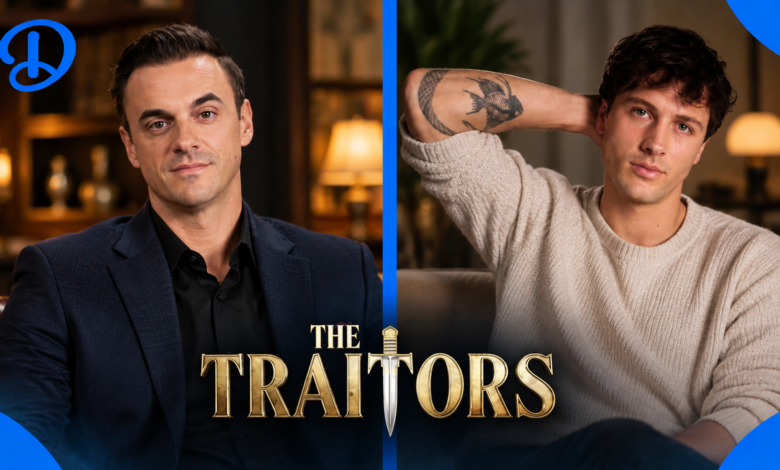
Dan Gheesling entered the second season of ‘The Traitors’ as one of the most strategic players in the realm of reality television. Known for his calculated decision-making on ‘Big Brother’, he arrived in Scotland with the goal of proving that his skills could translate to success in a different competition. However, his time in the castle highlighted a significant distinction between ‘controlling’ the game and simply ‘surviving’ within it.
Dan Gheesling became a ‘Traitor’—alongside Phaedra Parks and Parvati Shallow—which placed him in a powerful position right from the start. His strategy involved staying quiet, building relationships, and waiting for the right moment to influence the game. However, several decisions—including targeting ‘Johnny Bananas’ and waiting too long to expose a fellow ‘Traitor’—created challenges that proved difficult for him to overcome.
His participation in Season 2 serves as an instructive case study regarding social strategy, timing, trust, and the risks of relying too heavily on a familiar, well-established approach.
Quick Bio
| Detail | Information |
|---|---|
| Full Name | Dan Gheesling |
| Profession | Reality television personality, strategist, and educator |
| Known For | Winning Big Brother 10 and competing on The Traitors |
| Nationality | American |
| Major Shows | Big Brother, The Traitors |
| Role on The Traitors | Traitor |
| Season | Season 2, 2024 |
| Outcome | Banished in Episode 6 |
| Notable Strategy | Quiet gameplay, alliances, and calculated deception |
1. Entering The Traitors With a Strong Reputation
Dan Gheesling had already established himself as a formidable competitor before joining the American version of The Traitors. His victory on Big Brother 10 and his performance on Big Brother 14 earned him widespread recognition among fans of reality competition shows.
His prior experience provided valuable preparation for a game centered on deception. Unlike traditional competitions, The Traitors requires players to identify hidden adversaries while maintaining relationships with individuals who may be working against them.
Dan entered the castle hoping to employ the same strategic thinking that had served him well on Big Brother. He aspired to be a “Traitor”—a role he later revealed he had been keenly interested in even before the season began.
However, this format presented a different kind of challenge. In *Big Brother*, contestants have ample time to form alliances and manage conversations. In The Traitors, by contrast, decisions are made very rapidly, and suspicions can take root before a player has the chance to establish trust.
His reputation was both an asset and a liability. While it established his credibility as a strategist, it also prompted experienced rivals to scrutinize his behavior closely.
2. The Johnny Bananas Decision: An Early Strategic Risk
One of the most significant early moves involved Johnny Bananas Devenanzio, the veteran reality television competitor known for appearing on The Challenge.
As a Traitor, Dan participated in the decision to murder Bananas during the early episodes. The move removed a recognizable competitor who could have become influential as the game progressed.
From a strategic perspective, eliminating a strong player early can reduce the risk of future opposition. Bananas had substantial experience with competitive reality television and could potentially have become a valuable ally or a dangerous opponent.
However, the decision also carried risks. Removing a prominent contestant can attract attention, especially when other players begin examining who benefits from an elimination.
Bananas later criticized the move, arguing that he could have contributed to missions and helped the group build its prize fund. His departure also removed an experienced competitor whose relationships might have affected the wider game.
The decision illustrates an important distinction between eliminating a threat and making the best overall strategic choice. A player can be dangerous in one respect while remaining useful in another.
For Dan, the early murder did not immediately end his game, but it formed part of a season in which his decisions increasingly came under scrutiny.
3. The Quiet Strategy That Created Suspicion
Dan’s central strategy was to keep a low profile while building personal relationships with the other contestants.
He hoped that staying quiet would prevent him from making obvious mistakes. By avoiding aggressive accusations, he could potentially appear less threatening and preserve his position until the right opportunity emerged.
He also spent time speaking with contestants about subjects unrelated to the game. These conversations helped him learn about the other players while building connections away from the roundtable.
The problem was that The Traitors requires Faithful contestants to identify suspicious behavior. A player who rarely investigates possible Traitors can appear just as questionable as someone who makes too many accusations.
Dan’s silence became especially damaging because several contestants had experience with deception-based competition shows. They understood that withholding information could be a deliberate strategy rather than a sign of innocence.
Janelle Pierzina, his former Big Brother competitor, recognized his unusual behavior early. She suspected he was a Traitor and initially tried to maintain a working relationship with him.
Her suspicion grew because Dan was not offering the information she expected from someone genuinely interested in identifying the hidden Traitors.
This became one of his most important strategic mistakes: he attempted to avoid suspicion without doing enough to demonstrate that he was actively investigating the game.
4. The Failed Move Against Phaedra Parks
Another defining moment came when Dan attempted to shift suspicion toward fellow Traitor Phaedra Parks.
By this stage, pressure was building around his quiet approach. He needed to demonstrate that he was willing to identify suspicious players, and accusing another Traitor offered a possible route to survival.
The strategy was risky because Phaedra had developed strong social relationships within the castle. Her connections and conversational skills helped her maintain a comparatively secure position despite growing tension among the contestants.
Dan’s accusation also came relatively late. Rather than gradually building a convincing case, he needed the group to accept a sudden change in his behavior at a critical moment.
Phaedra defended herself, and Dan struggled to persuade the Faithful that his suspicion was credible. His attempt to redirect attention did not produce the result he needed.
In interviews following his elimination, Dan acknowledged that he had underestimated Phaedra’s abilities and later reflected that he should have made his move earlier.
The episode demonstrates why attacking an ally can be dangerous when the timing is wrong. A successful betrayal may protect a Traitor, but a failed accusation can expose the person making it.
5. Underestimating Peter Weber and the Shield Strategy
Peter Weber became another important obstacle in Dan’s game. The former Bachelor lead showed that contestants without extensive experience in deception-based competitions could still develop effective strategies.
One of Peter’s most consequential moves involved the shield, which protects a contestant from murder. Peter and other Faithful players used the situation surrounding Bergie’s shield to create a trap for the Traitors.
The plan encouraged the Traitors to consider murdering Carsten “Bergie” Bergersen, even though the shield meant that the attempted murder would fail. A failed murder would provide the Faithful with valuable evidence about the hidden players’ decisions.
Dan and his fellow Traitors took the bait. The failed attempt increased pressure on the Traitors and strengthened the Faithful’s ability to question their behavior.
This was a major strategic setback because it turned a protective advantage into a source of information for the opposition.
Dan later acknowledged that he had underestimated Peter. His experience on Big Brother had taught him to evaluate competitors through a particular strategic framework, but Peter demonstrated that effective gameplay could come from unexpected places.
The lesson was clear: a competitor’s previous television experience does not necessarily predict how well they will perform in a different format.
6. Dan’s Elimination and the Lessons From His Game
Dan’s downfall came during Episode 6 of The Traitors Season 2, when the Faithful voted to banish him.
By then, his quiet gameplay had attracted considerable suspicion, his attempted accusation against Phaedra had failed, and the shield-related strategy had placed the Traitors under additional pressure.
His elimination showed the limits of relying on reputation alone. A successful history on another show can establish credibility, but it cannot replace adapting to the rules and social dynamics of a new competition.
His biggest mistakes were connected. Staying quiet gave his opponents room to speculate. Delaying his accusation against Phaedra left him with less time to build support. Underestimating Peter allowed a clever plan to expose the Traitors’ decisions.
Nevertheless, his performance offered a useful contrast between two styles of reality competition. On Big Brother, he had opportunities to develop plans over longer periods. On The Traitors, the rapid pace made delayed decisions more costly.
The season did not erase his earlier achievements. Instead, it showed that even experienced strategists can struggle when their usual methods fail to match the demands of a new game.
Conclusion
Dan Gheesling’s journey in the second season of The Traitors was defined by bold decisions, misplaced trust, and the challenges of adapting a familiar strategy to a different format. His role in the early “murder” of Johnny Bananas, his quiet approach, and his unsuccessful attempt to shift suspicion toward Phaedra Parks—all these factors ultimately led to his elimination from the game.
The most important lesson from Dan Gheesling’s gameplay is that while strategic experience matters, flexibility is equally crucial. Due to his reputation, all eyes were on him; however, the ‘Faithfuls’ eventually discerned the flaws in his approach. His participation serves as an instructive example of how timing, communication, and social awareness can determine the outcome of a competition rooted in deception.
(Frequently Asked Questions)
Why was Dan Gheesling a Traitor on The Traitors?
Dan Gheesling was selected as a Traitor for the second season of the American series, which premiered in 2024. His background on Big Brother made him a recognizable strategic competitor. He had also expressed strong interest in receiving the Traitor role before the game began.
What was Dan Gheesling’s biggest mistake on The Traitors?
His biggest mistake was arguably remaining too quiet for too long. His approach was designed to reduce suspicion, but it made him look unhelpful to contestants trying to identify the Traitors. His delayed accusation against Phaedra Parks further weakened his position when he needed support.
Who exposed Dan Gheesling on The Traitors?
Several Faithful contestants became suspicious of Dan, including Peter Weber and Janelle Pierzina. Peter’s strategic play involving the shield increased pressure on the Traitors, while Dan’s behavior and failed attempt to accuse Phaedra contributed to the case against him at the roundtable.
Why did Dan Gheesling target Phaedra Parks?
Dan attempted to direct suspicion toward Phaedra when his own position became increasingly vulnerable. He needed to show the Faithful that he was actively identifying possible Traitors. However, Phaedra defended herself effectively, and the accusation failed to save him.
When was Dan Gheesling eliminated from The Traitors?
Dan was banished during Episode 6 of the second American season in February 2024. His elimination followed growing suspicion about his quiet gameplay and his unsuccessful attempt to shift attention toward Phaedra Parks. His departure marked a major turning point in the season’s Traitor storyline.
Did Dan Gheesling win The Traitors Season 2?
No. Dan Gheesling was banished before the finale and did not win the season. His experience on Big Brother had established him as a strong strategic player, but the different social dynamics and faster pace of The Traitors ultimately worked against his approach.
For more information so visit this site : Dailyhype.co.uk

I’m a professional blogger and graduate passionate about sharing the latest news, trending topics, and relevant updates. My goal is to provide readers with fresh, informative, and engaging content that keeps them informed and up to date.